
Michigan HVAC Team • Ypsilanti First
Heating Repair in Ypsilanti, MI
No heat, weak heat, uneven rooms, short cycling, thermostat trouble, airflow problems or a heat pump that will not heat correctly? A-Team Heating & Cooling diagnoses the whole heating system, explains what failed, and helps homeowners in Ypsilanti, Ann Arbor, Canton and Belleville choose the right repair path.
No-Heat Quick Decision
No heat right now? Check the safe basics, then stop guessing.
Leave first if you smell gas or a CO alarm sounds
Do not keep cycling the thermostat, open equipment panels or try to relight anything. Leave the home and contact the gas utility or emergency services from a safe location. Heating repair can wait until the immediate safety concern is addressed.
If there is no gas odor or alarm
Confirm the thermostat is set to Heat, raise the set point a few degrees, make sure the system switch and breaker have not obviously been turned off, check whether the filter is heavily clogged, and verify supply and return grilles are not blocked. Heat-pump owners can also look for heavy snow or debris around the outdoor unit without opening it.
Call when heat still does not return
If the system will not start, repeatedly shuts down, blows cold air for an extended period, trips a breaker again, or the home temperature keeps falling, professional diagnosis is the safer next step. Repeated resets can hide the symptom without fixing the cause.
Broad System Repair
What counts as a heating-system repair?
Heating repair is broader than furnace repair. A whole-home comfort problem can come from the thermostat, controls, electrical components, blower and airflow, duct distribution, a heat pump operating in heating mode, auxiliary heat, or packaged equipment. The right diagnosis starts with the symptom and follows the system until the actual failure is found.
This page is built for that broader intent. If the problem is clearly inside a gas or electric furnace and you want furnace-specific troubleshooting, parts and repair guidance, use A-Team’s dedicated furnace repair in Ypsilanti page. Keeping those jobs separate makes it easier for homeowners and search engines to reach the right answer instead of making two pages fight over the same furnace terms.
For planned heating options beyond repair, the heating services hub explains the full cluster, while HVAC services covers heating, cooling and system-wide help.
Symptoms We Diagnose
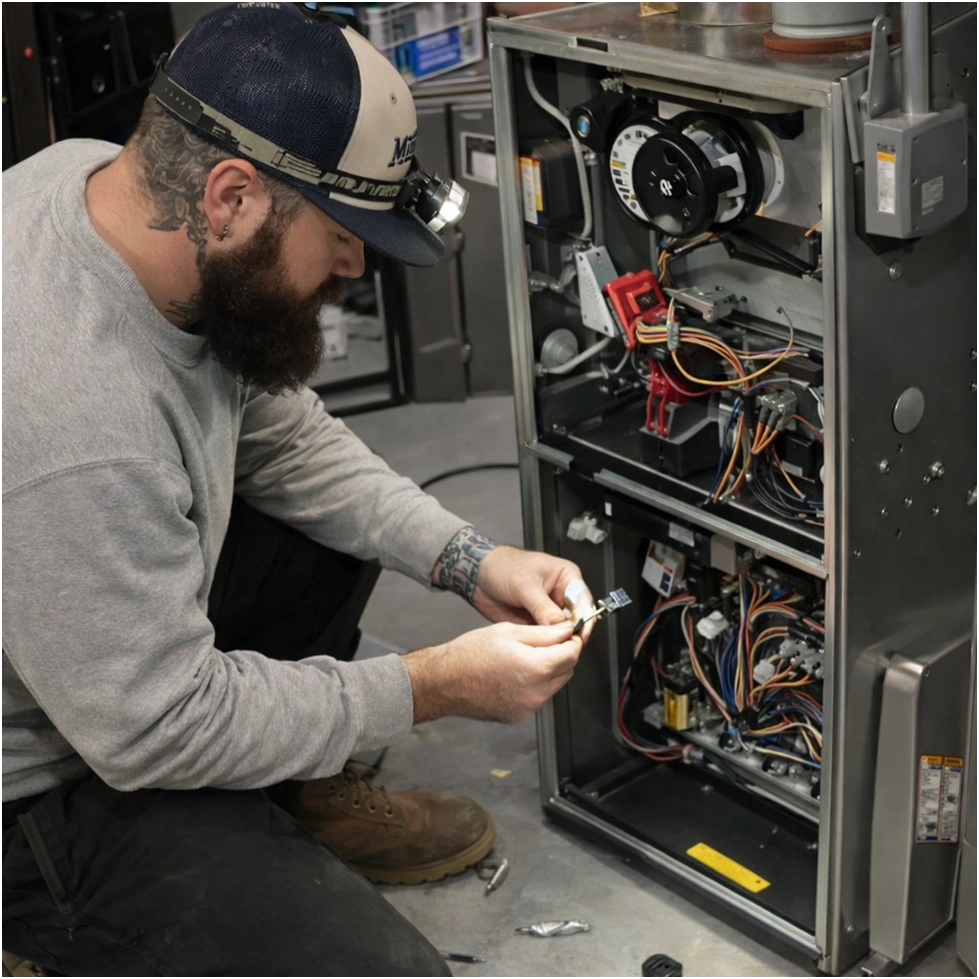
Running heater, cold house: where the problem can hide
A heating system can technically be “running” and still fail to deliver comfort. That is why the complaint matters as much as the equipment label.
Weak or lukewarm heat
Low supply temperature or weak airflow can be tied to thermostat settings, airflow restrictions, blower performance, control problems, heat-pump operating conditions or other system faults. A technician should verify what the equipment is being asked to do and what it is actually delivering.
Some rooms stay colder
Uneven heating often points beyond the heating appliance itself. Closed or blocked registers, return-air limitations, duct leakage, balancing problems, insulation differences or zoning/control issues can all create rooms that lag behind the thermostat location.
Short cycling
A heater that starts and stops too often may be reacting to restricted airflow, a thermostat/control signal, overheating protection, equipment sizing, sensor problems or another fault. The important question is why the safety or control sequence keeps ending the cycle.
System runs constantly
Long run times can happen during severe weather, but they can also signal lost capacity, duct loss, poor airflow, a thermostat issue or a heat pump relying too heavily on backup heat. Performance measurements separate weather load from equipment trouble.
Thermostat + Controls
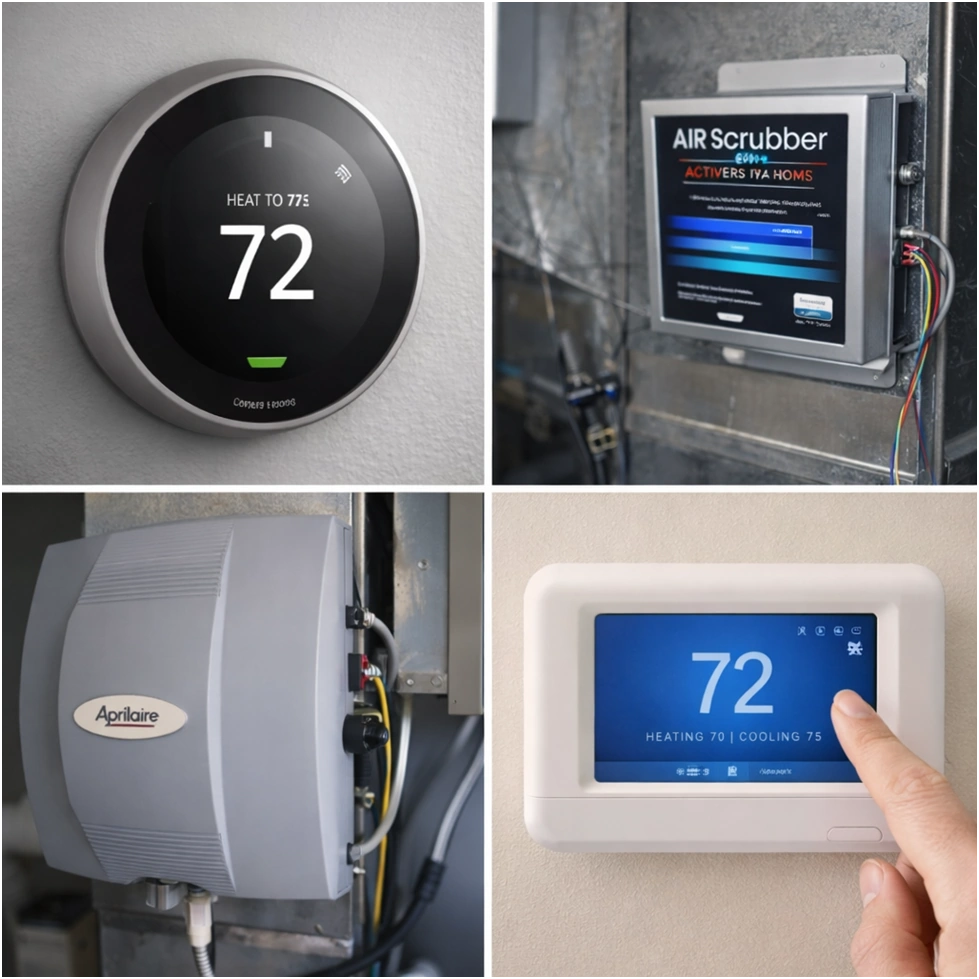
Can thermostat problems look like heating-system failures? Absolutely.
A thermostat is the command center, so a bad temperature reading, incorrect mode, weak power supply, wiring issue, communication fault or incompatible setting can make working equipment look broken. Some systems also depend on control boards, relays, sensors and safety switches that have to agree before heat is allowed to run.
A-Team can diagnose the crossover between controls and the heating equipment. If the thermostat itself is the primary problem, route the repair to the dedicated thermostat replacement and repair resource rather than padding this page with a second thermostat service page.
Airflow + Distribution
Uneven heating is often a system problem, not just an equipment problem.
Forced-air heating depends on a complete loop: conditioned air has to move through supply ducts into rooms, and enough return air has to make it back to the equipment. A dirty filter, blocked return, damaged or disconnected duct, poor balancing, blower problem or a closed register can change the pressure and airflow throughout the home.
If upstairs bedrooms stay cold, one side of the house never catches up, or airflow is noticeably weaker at several registers, the diagnostic should include distribution rather than stopping at the heater cabinet. ENERGY STAR also notes that dirty filters make HVAC systems work harder and that airflow problems reduce comfort and system performance.
Homeowners can safely confirm vents are open and unobstructed and check a user-serviceable filter. Duct changes, blower testing and internal electrical work belong with a trained HVAC professional.
Why are some rooms colder than others?
Short answer: the heating equipment may be producing heat correctly while the home is failing to distribute it evenly. Duct leakage, return-air limitations, closed registers, zoning issues, insulation differences and blower performance can all create hot-and-cold rooms.
ENERGY STAR HVAC maintenance checklist →Heat Pump Heating Mode
Heat-pump heating problems are not diagnosed the same way as furnace problems.
A heat pump transfers heat and can reverse between cooling and heating. That adds operating states and components a furnace does not use. In winter, a heat pump may run longer, deliver air that feels less “hot” than furnace air, enter a normal defrost cycle, or call for auxiliary heat. Those normal behaviors can look like a breakdown until the system is tested.
Cold air in heating mode
Briefly cooler air can occur during defrost, but persistent cold air can point to a mode/control problem, low capacity, refrigerant-side trouble, outdoor-unit issues or auxiliary heat that is not supporting the system when needed.
Outdoor unit iced over
Light frost can be normal in winter. Heavy ice that does not clear deserves service. Do not chip ice off coils or force a reset. The defrost controls, sensors, airflow and refrigerant circuit need proper diagnosis.
Auxiliary heat runs too much
Backup heat can be normal in very cold conditions, but frequent or extended auxiliary operation may indicate the heat pump is not carrying the expected load. Controls, outdoor conditions and system performance should be evaluated together.
A-Team’s site already identifies heat pumps as part of its heating and cooling service scope. Homeowners wanting a primer can visit What Is a Heat Pump? or review ENERGY STAR air-source heat pump guidance.
Packaged + Split Systems
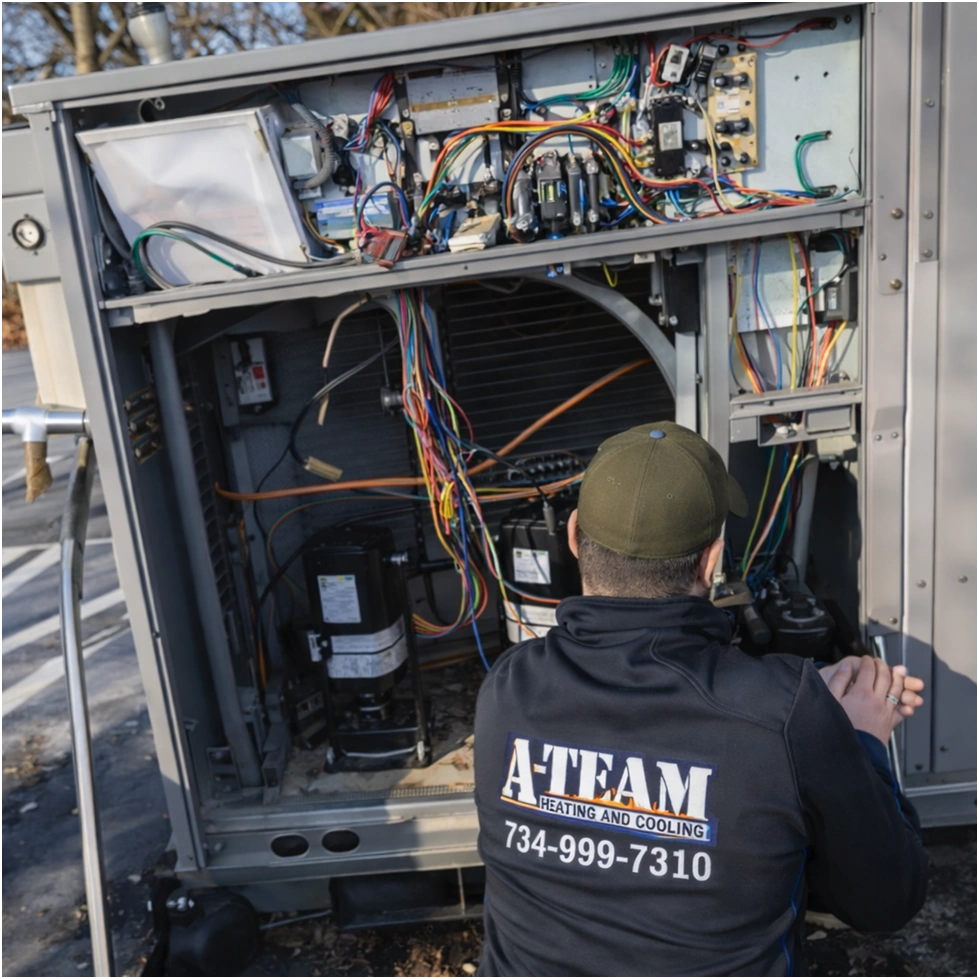
System-level repair includes equipment outside the furnace box.
A-Team’s existing site confirms service for packaged HVAC units, including repair and maintenance. Packaged systems place multiple heating and cooling components in one cabinet, while traditional split systems divide indoor and outdoor components. Either layout can create heating complaints that involve electrical controls, blower operation, refrigerant components, thermostat communication, condensate handling or airflow.
That makes this broad heating-repair page the right place to discuss system-level symptoms without turning it into a second packaged-unit landing page. For detailed packaged-system information, link to packaged HVAC unit services.
Electrical and control faults matter
Loose or failed electrical components, a tripped safety, damaged wiring, control-board faults, relays or motor-start components can stop heat or make it intermittent. If a breaker trips again after a single reset, stop resetting it and schedule service. Repeated breaker trips are a symptom, not a repair plan.
Professional Diagnosis
What a heating-repair diagnostic should actually answer
Confirm the complaint
No heat, weak heat, uneven rooms, short cycles, noise, airflow or control trouble. The technician starts with what the homeowner is experiencing.
Verify controls and operating sequence
Thermostat call, system mode, safeties, electrical response and the order in which components start are checked before parts are blamed.
Measure performance
Airflow, temperatures and equipment behavior are compared with what the system should be doing. Heat-pump and packaged-system tests follow their own operating modes.
Explain the root cause
You should know what failed, what repair is recommended, what can wait, and whether another issue could make the same symptom return.
Verify operation after repair
The system should be restarted and checked in the mode that caused the complaint so the repair is confirmed under real operation.
Emergency vs. Routine
When should you call for emergency heating repair?
Call urgently
- No heat during freezing weather and the indoor temperature is dropping.
- Repeated breaker trips, burning/electrical odor, sparking or signs of overheating.
- A carbon-monoxide alarm, gas odor or suspected combustion problem. Leave first and contact the appropriate emergency/utility service.
- A vulnerable person in the home cannot safely tolerate the loss of heat.
- A heat pump or system has stopped entirely and backup heat is not maintaining the home.
Schedule routine repair soon
- One area heats poorly but the home still has safe heat.
- The system runs longer than normal, short cycles occasionally or has declining airflow.
- Thermostat readings or zoning seem inconsistent.
- New noises or intermittent faults appear but the system still operates.
- You want repair-vs-replacement guidance before the next cold spell.
Repair Cost Planning
How much might heating repair cost?
There is no responsible one-number answer before diagnosis. A thermostat or simple electrical correction is a different job from a blower, control, heat-pump refrigerant issue or major system component. Price also changes with parts availability, equipment type, accessibility and whether the call is after hours.
A-Team should not publish a made-up local repair range just to satisfy a search snippet. The useful answer is to diagnose the cause, explain the repair scope, and give the homeowner the actual price before approved work begins. Financing is available through A-Team’s financing page, subject to credit approval and the lender’s terms.
When comparing options, ask what is included in the repair, whether another failing component is contributing to the symptom, and how the repair fits the age and condition of the overall system.
Repair or replace?
Repair usually makes sense when the system is otherwise sound, the failure is isolated and the expected remaining life justifies the work. Replacement deserves a serious look when breakdowns are frequent, comfort problems persist, major components are failing, or the equipment is old enough that continued repairs no longer make financial sense.
ENERGY STAR lists frequent repairs, rising energy bills, uneven temperatures and older equipment among the signs that it may be time to evaluate replacement.
ENERGY STAR replacement guidance →Choose the Right Next Page
Repair, replacement and maintenance should not compete with each other.
Ypsilanti Authority
Heating repair built around Southeast Michigan winter conditions
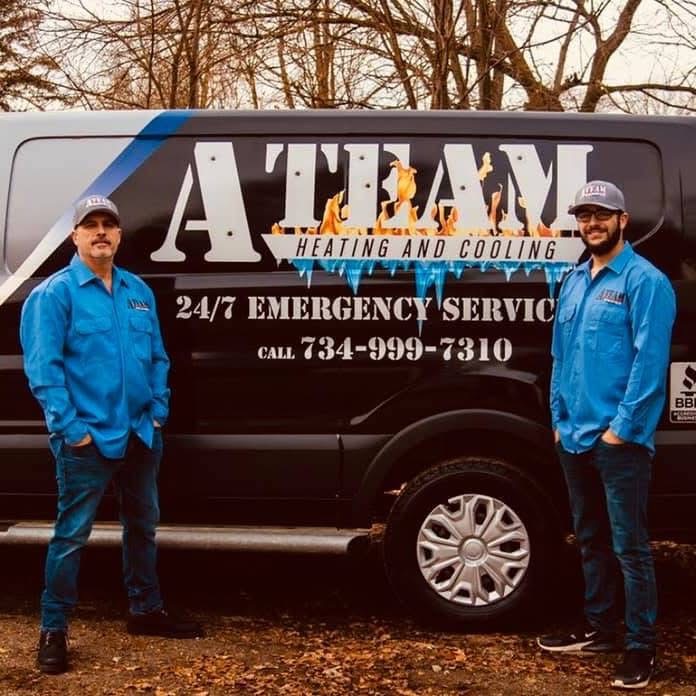
A-Team Heating & Cooling is based in Ypsilanti and serves homeowners across Ypsilanti, Ann Arbor, Canton, Belleville and nearby communities. The company site and BBB profile both identify heating repair, heater repair, furnace repair, heat-pump/HVAC work and emergency heating service within its service scope.
Ypsilanti homes range from older housing with long-lived duct systems to newer equipment using smarter controls and heat-pump technology. The repair process has to account for the home as well as the equipment: thermostat location, return-air paths, duct distribution, equipment age, outdoor conditions and how the family actually experiences the rooms.
Homeowners in Ann Arbor, Canton and Belleville can use this page for broad heating-system guidance, while future city-specific pages should remain geographically focused instead of duplicating the Ypsilanti copy word for word.
Heating Repair FAQs
Direct answers for Ypsilanti homeowners
What counts as a heating-system repair?
Any repair that restores the home’s heating function can count, including thermostat and control faults, electrical problems, blower and airflow issues, duct distribution problems, heat-pump heating-mode failures, auxiliary heat problems and packaged-system faults. Furnace-specific repairs belong on A-Team’s dedicated furnace repair page.
Why is my heating system running but the house stays cold?
The system may be producing too little heat, moving too little air or losing heat through distribution problems. Thermostat settings, a clogged filter, blower performance, duct leakage, return-air restrictions, heat-pump capacity and control faults are common categories to investigate.
Why are some rooms colder than others?
Uneven rooms often point to airflow and distribution. Closed registers, blocked returns, duct leakage, balancing, zoning, insulation differences or blower performance can all make one part of the home lag behind even when the equipment is running.
Why is my heater short cycling?
Short cycling means the system starts and stops more often than expected. Restricted airflow, thermostat or sensor problems, overheating protection, control faults and equipment sizing can all contribute. A technician should identify why the cycle is ending before replacing parts.
Can thermostat problems look like heating-system failures?
Yes. A wrong mode, inaccurate reading, wiring/power problem or communication fault can prevent otherwise functional heating equipment from receiving the right command. Thermostat and equipment controls should be tested together.
How are heat-pump heating problems different from furnace problems?
Heat pumps reverse refrigerant flow to heat and cool, can enter defrost, and may use auxiliary heat. Those modes add failure points and normal behaviors that furnaces do not have. Persistent cold air, heavy icing, mode-switching trouble or excessive auxiliary heat should be diagnosed as heat-pump issues, not treated like a furnace by default.
What should I do if there is no heat?
If there is a gas odor or carbon-monoxide alarm, leave the home and contact the appropriate utility or emergency service. Otherwise, safely verify the thermostat mode/set point, obvious power switches/breaker, filter condition and open vents. If heat does not return or a breaker trips again, call for professional service.
When should I call for emergency heating repair?
Call urgently when no heat is causing indoor temperatures to fall during freezing weather, the system repeatedly trips electrical protection, there is burning or electrical odor, or the loss of heat creates a safety concern for someone in the home. Gas or CO concerns require leaving first.
How much might heating repair cost?
Cost depends on the actual failed component, system type, access, parts and urgency. A simple control correction and a major blower, board or heat-pump repair are not comparable jobs. The accurate price comes after diagnosis; A-Team should not publish a fictional one-size-fits-all local range.
When should a heating system be repaired versus replaced?
Repair is often sensible when the failure is isolated and the system is otherwise sound. Replacement becomes more reasonable when repairs are frequent, comfort remains poor, major components are failing, or older equipment is becoming expensive to keep operating. A-Team’s installation page covers planned furnace replacement.
What should homeowners safely check first?
Check thermostat mode and set point, the user-serviceable air filter, obvious power switches, open supply/return grilles and visible snow/debris around a heat-pump outdoor unit. Do not open electrical or combustion compartments, bypass safety switches, chip ice off coils or repeatedly reset tripped breakers.
Do you serve Ann Arbor, Canton and Belleville for heating repair?
A-Team’s current service-area messaging includes Ypsilanti, Ann Arbor, Canton and Belleville. Call (734) 999-7310 with your city and ZIP to confirm scheduling for your address.
Heating problem still not clear?
Describe the symptom. A-Team will diagnose the system.
No heat, weak heat, uneven rooms, short cycling, thermostat trouble, airflow issues or heat-pump heating problems all start with the same thing: finding the real cause.